By Matthew Coleman, May 4th, 2025
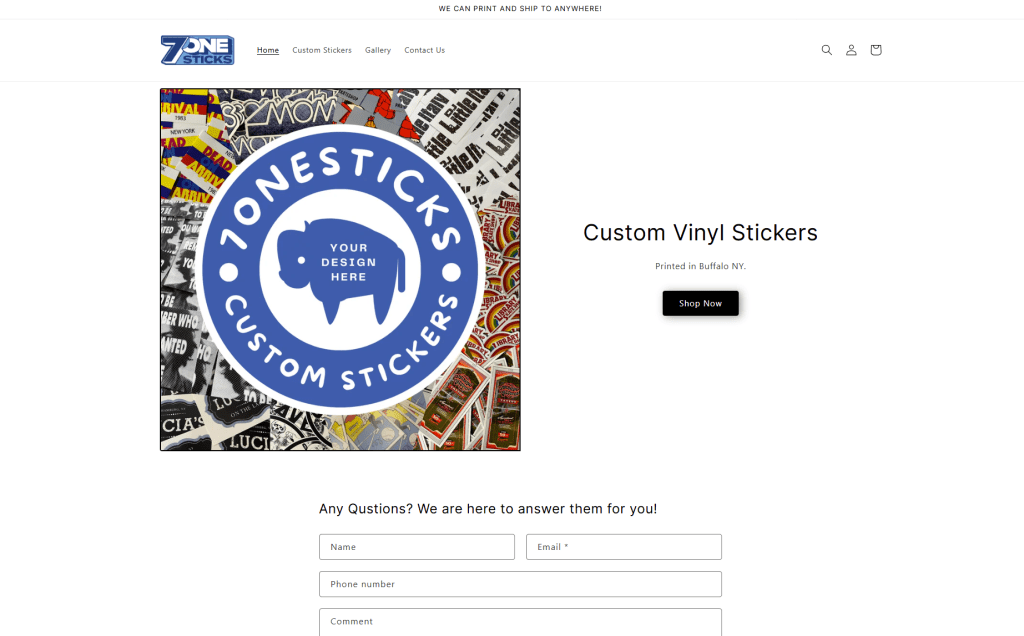
I very recently had the opportunity to work with 7onesticks, a small Buffalo-based business that specializes in custom vinyl stickers.
The main goal for my changes were to enable a more flexible pricing model, wherein users could input a custom sticker order (i.e., width, height, quantity, image) and immediately add that product to the cart with a calculated price. In addition to these changes, I also was able to update the site’s branding, and generally improve some long-standing accessibility issues that had vexed the business owner for years.
Imagine that! Messing with some CSS and .liquid templating files to fix simple issues like that can take only minutes for someone who knows what they’re doing, but unless you already do it all day in your day job, it can be a real blocker.
Shopify Theme Updates
For those of you unfamiliar with how Shopify sites work, essentially all of your data, including products and prices, are stored and configured on the Shopify platform. This can be good and bad: On one hand, it means that non-technical users can easily perform simple tasks on their own, like adding products, changing prices, and customizing images on the site. But on the other hand, it also means that if a tweak is a little too complicated, the Shopify platform can become quite restrictive and difficult to work with.
That’s where I come in!
In this case, a previous developer had done some work on 7OneSticks’ website by adding a file-upload field for certain products. The owner told me before starting that this upload feature sometimes didn’t work at all, and for a company that prints custom graphics onto stickers, this is basically a mission-critical piece of online infrastructure.
Thankfully, I could quickly recognize what needed to change and what could stay the same, all so that the customizability that is already built into Shopify could still be useful. This meant small things, like adding bootstrap, fixing a CSS issue and improving site accessibility under WCAG. Ultimately, the custom widget I added would never have worked without some of these tweaks (Due to stupid things like mismatched jQuery versions), and unless a developer actually knew what they were doing, this could mean sunk-costs for a business trying to do something similar.
Custom Price Calculator Integration
To help 7onesticks offer flexible, made-to-order stickers, we integrated the Apippa Custom Price Calculator–a pretty cool Shopify app that allows for on-site customization.
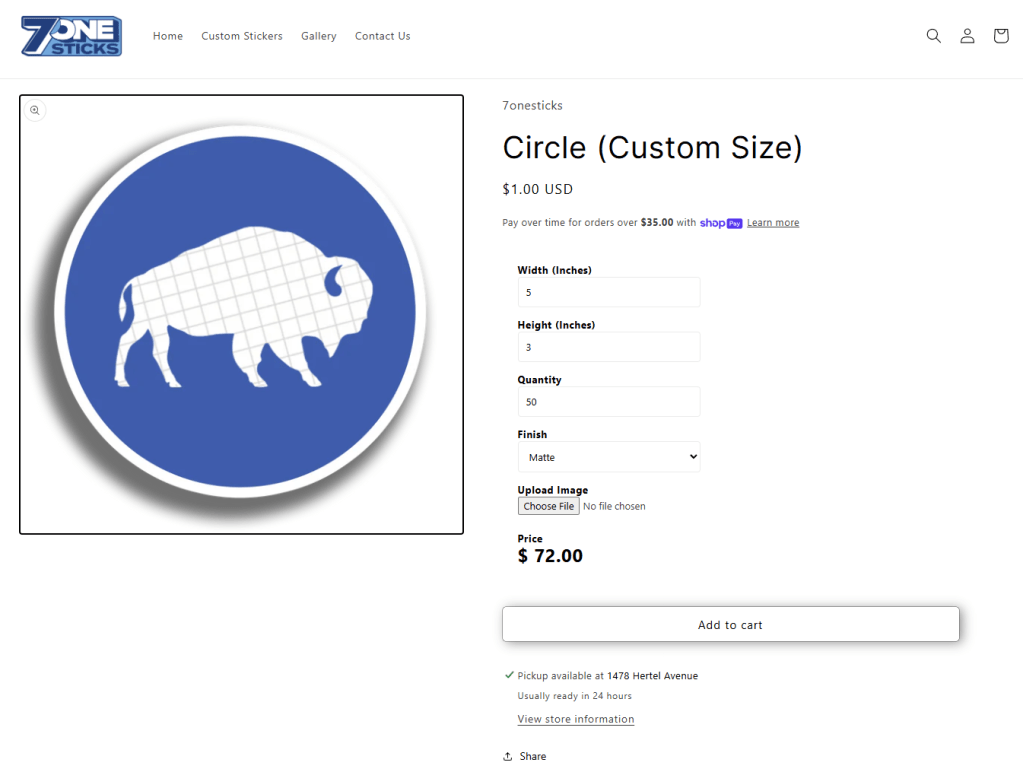
With this widget, customers can now:
- Enter the dimensions of their sticker (width × height)
- Choose the finish (e.g., gloss, matte, transparent)
- Enter a quantity
- Upload artwork files directly during the purchase process
All of this feeds into a real-time price calculation engine that ensures shoppers see accurate, up-to-date pricing for custom products… Read more about that in the next section!
Smart Pricing via Polynomial Surface Regression
One of the more technical challenges was converting a set of fixed pricing tiers into a smooth, continuous pricing model. Using data from 7onesticks’ existing size-based price chart, I created a 2D polynomial surface fit that models price as a function of area and quantity.

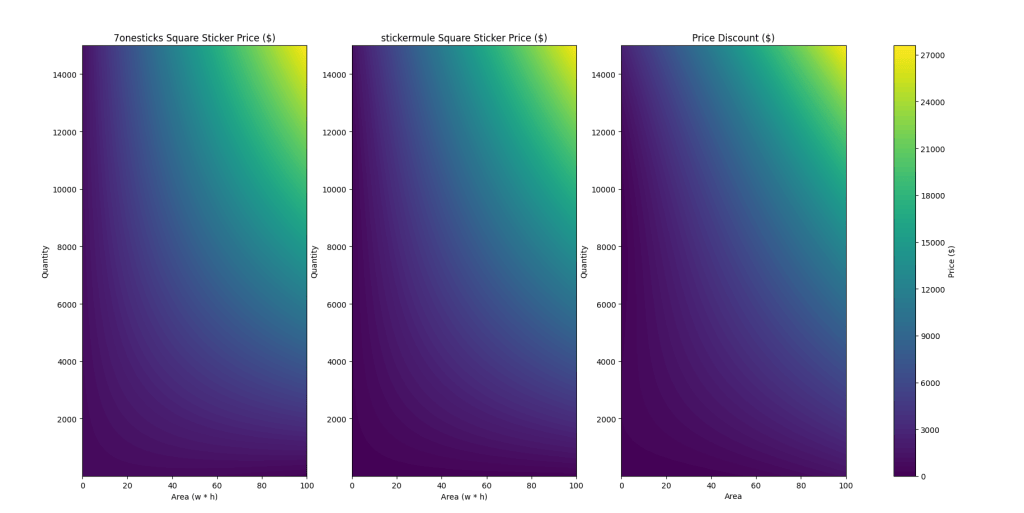
This was implemented using a least-squares regression and produced a flexible, future-proof pricing model that works well with the calculator app. The new model:
- Reduces the need for manual pricing updates
- Smooths out inconsistencies in old pricing
- Makes custom orders easier to scale as the business grows
- Is able to closely track a competitor’s pricing model
Takeaways
This project was a great example of how thoughtful engineering and design can elevate an e-commerce business. By combining visual polish with data-driven pricing logic, we helped 7onesticks streamline both the buyer experience and back-end operations.
👉 Need help launching or upgrading your Shopify store? Contact me to talk about what’s possible.
 BugSites